
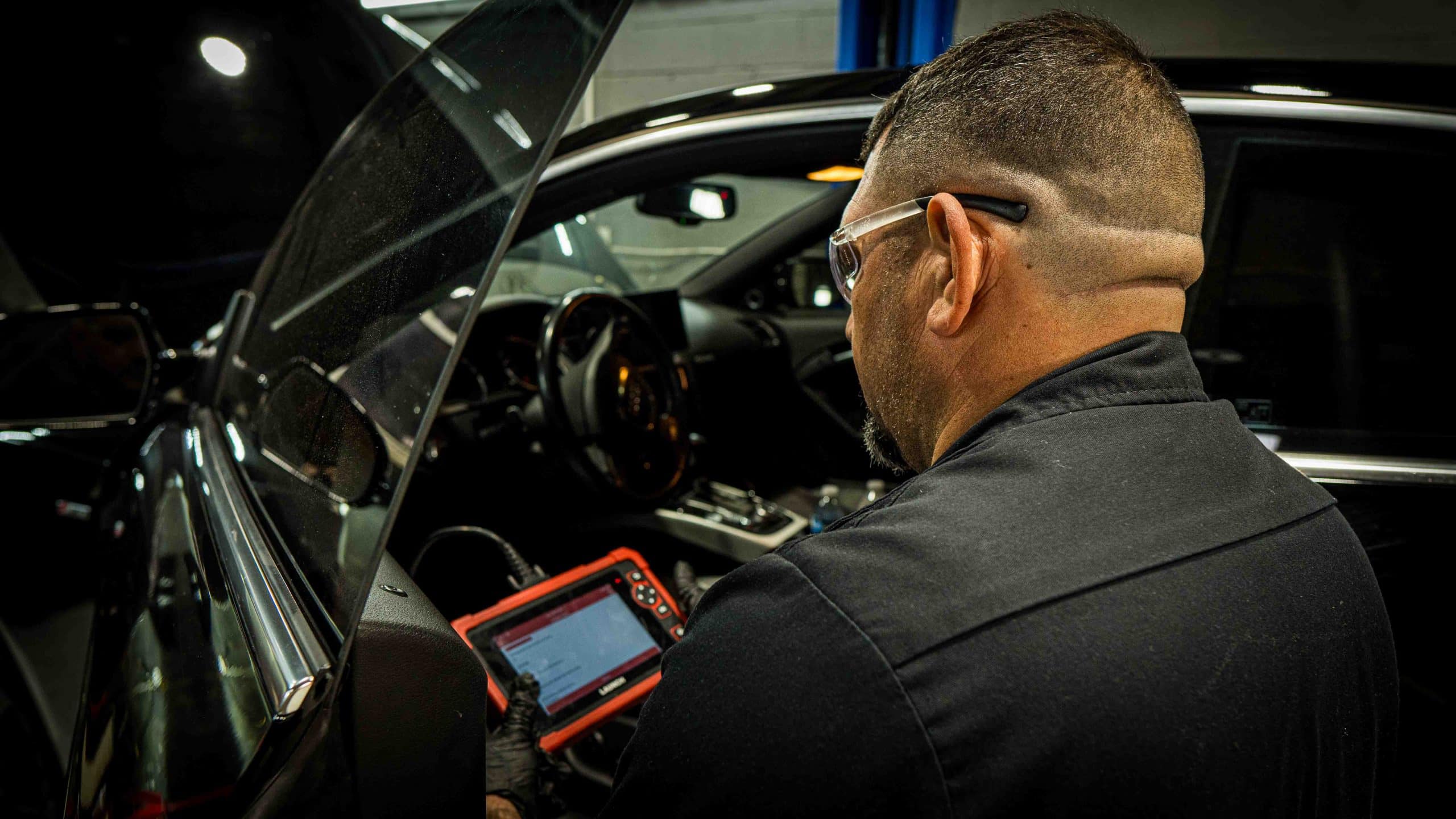
Car Won't Start? Here's Why (And How We Fix It at Your Location)
🚨 Car Won't Start Right Now?
We can be at your location in Fishers, Noblesville, and Hamilton County within 45 minutes for emergency diagnostics and repairs when your car won't start. We fix dead batteries, faulty starters, and alternator issues right on the spot—no tow truck needed.
Is your car not starting in Fishers or Hamilton County? 95% of no-start problems are caused by three components: the battery (60%), the starter (22%), or the alternator (13%). We’ll diagnose the exact problem at your location in 15 minutes using professional testing equipment. Most repairs are completed on-site: battery replacement $180-240, starter $320-480, alternator $350-550. Call (317) 537-1331 for emergency mobile auto repair service—we'll be there in 45 minutes.
🔑 Key Takeaways
- 60%: Common causes of starting problems include dead batteries ($180-240 for on-site replacement)
- We arrive within 45 minutes for emergency calls regarding vehicles that won't start in Hamilton County
- The diagnosis takes 15 minutes and includes voltage testing and load tests
- 95%: On-site repairs for starting issues (battery, starter, alternator)
- Free jump starts available with service—no charge if you just need a boost
3-Step DIY Troubleshooting Before You Call
Before calling for emergency service, try these 60-second checks. You might save $180 if it’s something simple:
Quick Diagnostic Flowchart
Silence (no clicking, no cranking): Dead battery or loose battery connection
Single loud CLICK: Dead battery or faulty starter
Rapid clicking (click-click-click): Low battery
Grinding noise: Starter gear problem
The engine cranks but won’t start: Not a battery or starter problem (fuel or ignition)
No dashboard lights at all: Completely dead battery or disconnected cable
Dimmer dashboard lights that brighten when you stop cranking: Low battery
Normal bright lights: The battery is fine; check the starter or fuel system
Open the hood and check the battery terminals. Are they:
White or green crusty buildup: Corrosion—clean with baking soda and water
Loose or wobbly: Tighten with a wrench (10 mm or 13 mm socket)
Clean and neat: The connection is good; it's likely a battery or starter issue.
Still won't start? Call us for emergency on-site diagnostics. We provide professional voltage testers, load testers, and replacement parts.
The Big 3: Battery, Starter, or Alternator?
Based on more than 680 service calls for vehicles that wouldn't start in Hamilton County, here's a breakdown of the common causes of failure and how we diagnose them:
| Component | % of No-Starts | Common Symptoms | Repair Cost |
|---|---|---|---|
| Dead Battery | 60% | No noise when turning the key, dim lights, rapid clicking | $180-240 |
| Starter Failure | 22% | A single loud click, a grinding noise, and the engine won’t start | $320-480 |
| Faulty Alternator | 13% | Battery warning light on, car stalled while driving, dim headlights | $350-550 |
| Corroded Terminals | 3% | Intermittent starts, white/green buildup on the battery | $0 (free cleaning) |
| Other (fuel, ignition) | 2% | The engine cranks but won't start; there's a smell of gasoline | Varies |
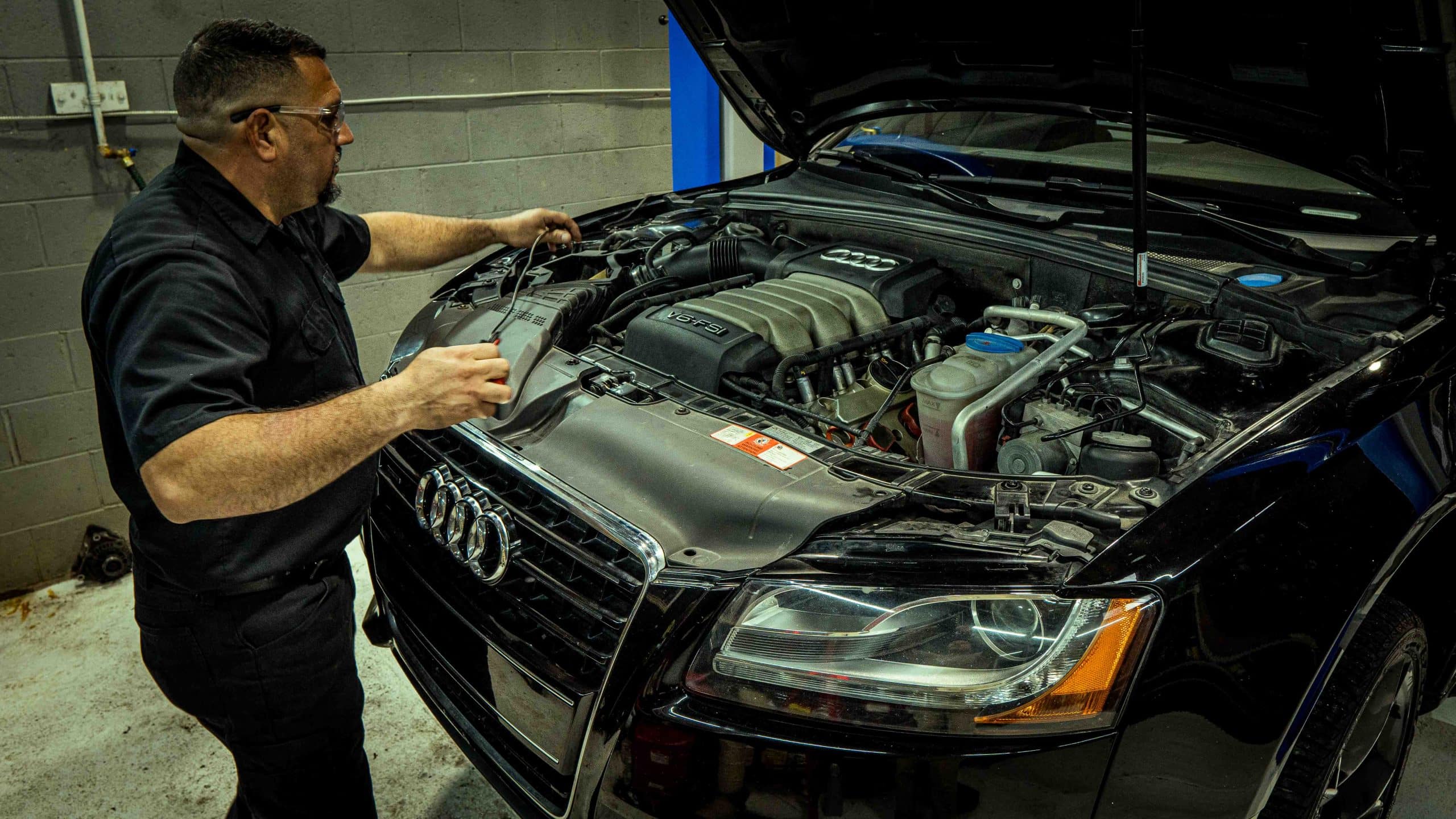
How We Diagnose No-Start Problems (15 Minutes)
When we arrive at your Fishers or Noblesville location, here is our diagnostic process:
1. Battery Voltage Test (3 minutes)
We test the battery voltage with the engine off (it should be 12.4–12.7 volts) and while cranking (it should remain above 9.6 volts). If the voltage is below these levels, the battery is faulty.
2. Load Test (5 minutes)
Apply a heavy electrical load to the battery for 15 seconds. A good battery maintains a voltage above 9.6V under load. If the load test fails, the battery cannot deliver cranking power even if the voltage appears to be okay.
3. Starter Circuit Test (4 minutes)
If the battery is in good condition, check the voltage at the starter solenoid while cranking. If the solenoid shows full battery voltage but the engine does not crank, the starter motor is faulty. If there is no voltage at the solenoid, there is a problem with the wiring or the ignition switch.
4. Charging System Test (3 minutes)
With the engine running (after jump-starting if necessary), test the alternator output. It should produce 13.8–14.4 volts at idle. A reading below 13.5 V indicates a faulty alternator that will not recharge the battery.
Total diagnosis time: 15 minutes. You’ll receive a written diagnosis with voltage readings before we do any work. Diagnostic fee: $100, which can be applied toward repairs.
Dead Battery: The Most Common Culprit
Car batteries in Indiana last an average of 3 to 5 years. Extreme temperatures cause batteries to fail more quickly—we see spikes in battery failures during:
- January–February: Cold starts below 0°F drain weak batteries
- July–August: Temperatures above 95°F cause battery fluid to evaporate and warps the plates
- After sitting unused: Going 2–3 weeks without driving can damage a car's modern electronics
Signs That Your Battery Is Dying
- Slow cranking on cold mornings (the engine turns over sluggishly)
- Headlights dim when idling at stoplights
- Needed a jump start more than once in 6 months
- The battery is more than 4 years old (check the date code on the top label)
- Swollen battery case (bulging sides = damage caused by overheating)
On-Site Battery Replacement ($180-240)
We carry ACDelco, Interstate, and DieHard batteries in our mobile service van. Replacement takes 20 minutes and includes:
- Remove the old battery and inspect the cables and terminals
- Clean the battery tray and terminal connectors with a wire brush
- Install a new battery (make sure it has the correct size and CCA for your vehicle)
- Apply terminal protector spray to prevent future corrosion
- Test the charging system to verify that the alternator is working
- Dispose of old batteries at an EPA-approved recycling facility
Warranty: 3-year free replacement on all batteries we install.
Dead Battery? We'll Be There in 45 Minutes
Emergency battery replacement in Fishers, Noblesville, and Hamilton County. Same-day service.
Failed Starter: The Second Most Common Problem
Starters fail gradually, then suddenly. You’ll usually notice warning signs weeks before they fail completely:
Warning Signs of Starter Failure
- Intermittent failure to start (starts on the 2nd or 3rd try)
- Grinding noise when starting (worn Bendix gear)
- A whirring sound without the engine cranking (pinion not engaging)
- Smoke coming from under the hood after attempting to start the engine (electrical short)
- A single loud CLICK when turning the key (solenoid engaging, motor not spinning)
On-Site Starter Replacement ($320-480)
We can replace starters on 85% vehicles without lifting the car. Average replacement time: 60–90 minutes. Includes:
- Disconnect the battery (safety first)
- Remove the starter mounting bolts (usually 2–3 bolts)
- Disconnect the electrical connections (battery cable and trigger wire)
- Install a new starter (ACDelco or Bosch OEM-equivalent)
- Reconnect the wiring and test the operation
- Check the flywheel teeth for damage (a common wear point)
Prices vary by vehicle: Compact cars $320-380, SUVs/trucks $400-480 (larger starters, harder to access).
Vehicles for which we CAN’T replace the starter on-site: Some BMW, Audi, and Subaru models have starters located under the intake manifolds. These require specialized shop equipment and 3–4 hours of labor—we’ll diagnose the issue on-site and recommend a repair shop.
Faulty Alternator: The Battery Killer
Alternators recharge the battery while driving. When they fail, the battery drains within 30 to 60 minutes of driving, and then you’re stranded.
Symptoms of Alternator Failure
- Battery warning light on the dashboard (battery icon or "ALT")
- Headlights dim when accelerating or at idle
- Electrical accessories (radio, AC) cutting out while driving
- The battery dies after driving (gets a jump start, then dies again in 30 minutes)
- Whining noise from the engine compartment (bearing failure)
- Smell of burning rubber (slipping serpentine belt)
On-Site Alternator Replacement ($350-550)
We can replace alternators on most vehicles in 60–90 minutes. Includes:
- Removing the serpentine belt
- Disconnect the battery and alternator wiring
- Remove the alternator mounting bolts (2–4 bolts, depending on the vehicle)
- Install a new alternator (ACDelco, Bosch, or Denso OEM-quality)
- Install a new serpentine belt (if worn—$40 additional)
- Charging output test (13.8–14.4 V at idle, 14.0–14.6 V at 2000 RPM)
Price factors: Compact cars: $350-420; larger engines: $450-550. High-output alternators (140+ amps) cost more.
Jump Start Service: Free With Repair
Need a jump start to get to work or an appointment? We provide free jump starts if you’ve scheduled a repair. Just need a jump start without any other service? We don’t charge for that either—consider it a courtesy from your local mobile mechanic.
The safe jump-start procedure we follow:
- Connect the positive (+) cable to the positive terminal of the dead battery
- Connect the positive (+) cable to the positive terminal of the good battery
- Connect the negative (-) cable to the negative terminal of the good battery
- Connect the negative (-) cable to an unpainted metal surface on the disabled vehicle (NOT the battery—to prevent sparks)
- Start the jump-start vehicle, wait 5 minutes for the dead battery to charge
- Attempt to start a stalled vehicle
- Remove the cables in reverse order
Important: After a jump start, your car needs to run for at least 30 minutes to recharge the battery. Driving on the highway is better than idling. If you only drive 10 minutes to work, the battery won’t fully recharge and you’ll need another jump start tomorrow.
Service Areas – Emergency No-Start Service
We provide emergency mobile mechanic service for vehicles that won't start throughout Hamilton County:
Noblesville
Carmel
Westfield
McCordsville
Zionsville
Frequently Asked Questions
Why Choose Fishers Mobile Mechanic for Car Starting Problems
When your car won’t start, you need help fast. Here’s why drivers in Hamilton County call us first:
- 45-Minute Response: Emergency services arrive within an hour throughout Fishers, Noblesville, and Carmel
- 95% On-Site Repair Rate: Most battery, starter, and alternator problems can be fixed right where you are—no tow needed
- Professional Diagnostics: Digital voltage meters, load testers, charging system analyzers—no more guesswork
- Transparent Pricing: Written estimates provided before work begins. Diagnostic fee applied toward repairs
- Quality Parts: ACDelco, Interstate, Bosch, Denso—OEM-equivalent, not cheap aftermarket
- 3-Year Warranty: Free replacement for all batteries; 1-year warranty on starters and alternators
- Bilingual Service: Fluent in English and Spanish (Orlando, owner)
- Free Jump Starts: No charge if you just need a little help getting started
Car Won't Start? Call Now for Emergency Service
We'll be there in 45 minutes. We perform on-site repairs for batteries, starters, and alternators in Hamilton County.
Business Information: Fishers Mobile Mechanic | 1478 S 8th St, Noblesville, IN 46060 |
(317) 537-1331 |
orlando@fishersmobilemechanic.com
 English
 Spanish
